
NIMASA Urges Maritime Journalists to Champion Ethical Reporting for Nigeria’s Blue Economy

The Nigerian Maritime Administration and Safety Agency (NIMASA) has emphasized the importance of ethical journalism among maritime reporters, encouraging them to engage in constructive reporting and collaborate with industry stakeholders to enhance Nigeria’s burgeoning blue economy.
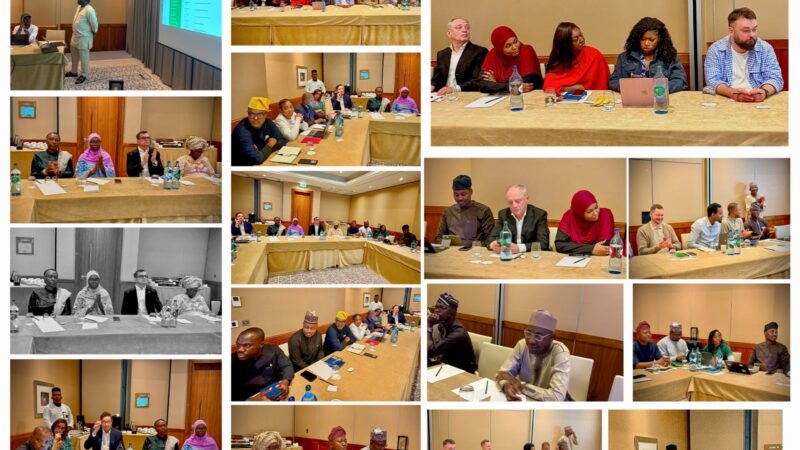
This message was conveyed during a recent courtesy visit by the newly-elected executives of the Maritime Reporters Association of Nigeria (MARAN) to NIMASA’s headquarters in Lagos.
On Monday, the newly-elected leaders of the Maritime Reporters Association of Nigeria (MARAN) visited the Nigerian Maritime Administration and Safety Agency (NIMASA) to discuss collaboration and the promotion of ethical journalism within the maritime sector.
The delegation was welcomed by Mr. Osagie Edward, NIMASA’s Deputy Director of Public Relations, along with senior officials from the agency.
This visit marked the first official interaction between the new MARAN leadership and NIMASA, providing an opportunity to explore joint efforts in areas such as capacity building for maritime journalists, effective information sharing, and support for the Federal Government’s blue economy initiatives.
During the meeting, the MARAN President expressed condolences to NIMASA for the recent passing of staff member Ifenyinwa Okonkwo, offering prayers for her family and colleagues.
He highlighted the visit’s objective of reinforcing the longstanding relationship between MARAN and NIMASA while advocating for enhanced collaboration to promote responsible journalism in the maritime sector.
The MARAN President underscored the necessity for structured training programs aimed at improving maritime journalists’ understanding of industry dynamics, which would ultimately elevate the standard of reporting in the field.
In response, Osagie Edward congratulated the new MARAN executives, recognizing their election as a testament to the trust placed in them by their peers.
He acknowledged the enduring partnership between MARAN and NIMASA, noting that the association has played a vital role in the maritime industry’s development for over two decades.
Edward encouraged the new leadership to build upon the successes of their predecessors and assured them of NIMASA’s commitment to collaborating with maritime journalists to foster industry growth and bolster the national economy.
He emphasized the media’s crucial role in highlighting the vast opportunities within Nigeria’s blue economy and attracting necessary investments to realize its full potential.
“The Nigerian blue economy presents enormous opportunities. If the sector is properly projected and branded, the world will become more aware of the potentials we have and investors will come seeking opportunities. This will ultimately benefit the country,” Edward said.
He also revealed that Dr. Dayo Mobereola, the Director-General of NIMASA, is at the helm of a team dedicated to establishing Nigeria as a prominent maritime nation on the global stage.
“The DG is convinced that Nigeria has the potential to be a leader in maritime governance worldwide, and we are striving to make that vision a reality. This can only be accomplished through collective efforts for the benefit of our nation,” he remarked.
Regarding MARAN’s appeal for enhanced training opportunities, Osagie reassured the association that developing skills remains a top priority for NIMASA.
“Capacity building is a core focus for the management at NIMASA. We have acknowledged your request, and discussions are already underway to explore training opportunities for media professionals. We will maintain our engagement, as informed and constructive journalism is vital for the industry,” he explained.
Additionally, Daniel Kajo, the Assistant Director of Public Relations, encouraged MARAN members to uphold journalistic ethics and continue fostering professionalism in their reporting.
Kajo highlighted the significance of constructive criticism and fair reporting, as