
NAFDAC Won’t Frustrate MSMEs, Says DG

NAFDAC Won’t Frustrate MSMEs, Says DG
……..Agency outlines faster route to product registration, warns against middlemen
The Director-General of the National Agency for Food and Drug Administration and Control, Prof. Mojisola Adeyeye has assured operators of micro, small, and medium enterprises that the agency is not out to frustrate their businesses but to protect consumers and help genuine manufacturers produce safe and quality products.

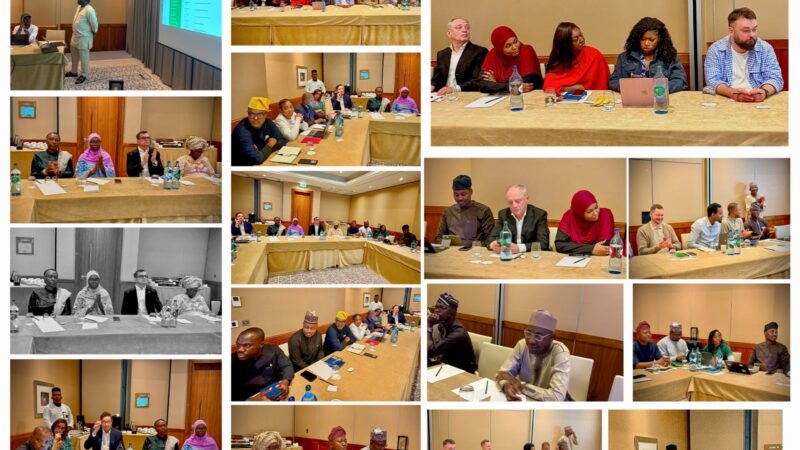
Adeyeye gave the assurance at the SMEDAN-NAFDAC Summit in Lagos, where she acknowledged concerns among MSME operators over registration fees, delays, and what they often perceive as cumbersome regulatory procedures.
She said NAFDAC had repositioned itself as an enabler of businesses while remaining firm on its mandate to ensure the safety, quality, and efficacy of regulated products.
According to her, MSMEs remain critical to Nigeria’s economic development as major employers of labour, custodians of indigenous food and health products, and important drivers of the country’s industrial and export ambitions.
“For many entrepreneurs, the journey from a promising idea in the kitchen, on the farm or in a small factory to a registered, trusted and exportable product is the most important journey of all.

“At NAFDAC, our task is to make that journey short, affordable, and predictable, with outcomes that are safe,” she said.
In a press statement issued by the agency’s spokesperson, Sayo Akintola, the Director-General explained that obtaining a NAFDAC registration number should not be viewed merely as a regulatory requirement but as an important mark of trust that assures consumers and international buyers that a product has been properly evaluated.

She said such certification could help Nigerian businesses gain access to markets within and outside the country, particularly as the African Continental Free Trade Area creates opportunities for Nigerian products across a market of more than one billion people.
Adeyeye explained that the registration process begins with documentation, followed by inspection of the manufacturing facility, laboratory analysis of product samples and, where all requirements are met, approval, and issuance of a NAFDAC registration number.
She urged applicants to obtain the relevant guidelines for their product categories from NAFDAC and submit their applications through the NAFDAC Automated Product Administration and Monitoring System, NAPAMS.
She said the electronic system had made it possible for MSMEs to submit and track applications from their workplaces or homes, thereby reducing travel costs, improving transparency, and limiting opportunities for sharp practices.
The agency, she added, has also introduced a number of measures aimed at reducing the burden on small businesses.
These include a 50 per cent reduction in registration charges for companies with five or fewer employees, dedicated small-business support desks, expedited laboratory analysis, decentralised registration through zonal offices, the use of common or shared facilities for certain low-risk products, and free counselling and guidance through NAFDAC’s zonal and state offices.
Adeyeye also cautioned MSME operators against relying on unrecognised agents and consultants to secure registration.
She said some applicants had reportedly paid several millions of naira to agents for services that could have been obtained directly from NAFDAC at significantly lower official charges.
“A conversation with us before submission saves time and money,” she said.
The NAFDAC boss explained that delays in registration were often caused by incomplete documentation, inadequate labelling, manufacturing facilities that were not ready for inspection, and failure by applicants to respond promptly to regulatory directives.
She therefore advised MSME operators to ensure that their applications were complete, facilities were ready for inspection, and products met the required standards before submitting applications.
On export opportunities, Adeyeye listed processed foods, spices, cocoa and cashew derivatives, shea products, herbal and traditional preparations, and cosmetics among Nigerian products with significant international market potential.
She, however, warned that Nigerian exporters must prioritise compliance to avoid rejection of their consignments at foreign ports.
According to her, some Nigerian products have been rejected abroad because of contamination, poor packaging, inadequate labelling, lack of appropriate registration and certification, or failure to undertake required laboratory tests
She said such rejections not only cost individual exporters financially but also damage the reputation of Nigerian products and create difficulties for other exporters.
“Our shared target must be zero rejection of Nigerian exports,” she said.
To facilitate exports, the Director-General said NAFDAC provides export certification, technical support, and laboratory testing for registered exporters.
She explained that, depending on the product and destination-country requirements, the agency issues export certificates, health certificates, certificates of pharmaceutical products, and certificates of free sale.
Registered exporters, she added, could also receive technical assistance and access to free or highly subsidised laboratory testing for mycotoxins, pesticide residues, and heavy metals, among other parameters.
She said NAFDAC also guides manufacturers on Good Manufacturing Practices, Good Hygienic Practices, and applicable sanitary and phytosanitary requirements.
The agency, she added, had organised export workshops across the country and was engaging freight consolidators, clearing agents, and pre-shipment inspection agents to improve compliance and promote the use of electronic channels for export certification
Adeyeye urged MSMEs to register their products early and renew their registrations before expiry, build quality into every stage of production, seek NAFDAC’s guidance before designing labels or constructing facilities, and regard regulatory inspections as opportunities for improvement.
She also advised manufacturers and exporters to reject shortcuts and improper payments, stressing that applicants do not need to pay agents or insiders to access services that are available through NAFDAC’s transparent processes.
She urged anyone who encounters a demand for improper payment to report it to the agency.
The NAFDAC boss said the future of Nigeria’s economy would depend significantly on the ability of MSMEs to grow, formalise their operations, and compete effectively in domestic and international markets.
She noted that a properly registered and quality product could move from a small market stall in Nigeria to retail shelves around the world.
“Compliance is not the end of the entrepreneurial journey; it is the passport that allows a product made in Nigeria to be trusted at home and respected abroad,” Adeyeye said.
She reaffirmed NAFDAC’s commitment to supporting MSMEs, adding, “Our doors are open, our officers are ready to guide you, and our shared goal is safe products, thriving businesses, and a stronger Nigeria.”