
Retired DCG Peters Backs Younger Officers for Leadership, Calls for Structured Succession in Customs

Retired DCG Peters Backs Younger Officers for Leadership, Calls for Structured Succession in Customs
Dr. Olugboyega Peters, a retired Deputy Comptroller-General of the Nigeria Customs Service (NCS), has called for greater confidence in younger Customs officers, particularly those recruited in 2009, saying leadership appointments should be determined by competence, integrity, professional exposure and performance rather than age or length of service.
He advocated two-year transition committee for preservation of institutional knowledge.
Peters, who spent 35 years in the Nigeria Customs Service, described the emergence of the 2009 intake into senior management positions as a significant generational transition that must be properly managed to guarantee institutional continuity and sustained effectiveness.
Speaking on the future of the Service, he maintained that younger officers should be allowed to assume leadership responsibilities when they meet the necessary requirements, while experienced and retired officers should provide mentorship and guidance to preserve institutional knowledge.

“I would not assess leadership capacity purely on the basis of age or length of service. There are young officers who are exceptionally competent, disciplined and visionary. Similarly, there are experienced officers whose institutional knowledge and professional exposure are invaluable,” he said.
Peters disclosed that he had personally mentored several officers from the younger generation who had distinguished themselves through competence, dedication and excellent performance.
He, however, cautioned against extending the service of senior officers merely because of their experience or positions, arguing that such arrangements could undermine the morale of younger personnel and discourage legitimate career progression.
According to him, the Service must respect statutory retirement provisions and established succession procedures.
“Where government considers any transitional arrangement necessary, it must be lawful, transparent, properly justified and guided by institutional interest rather than personal considerations,” he added.
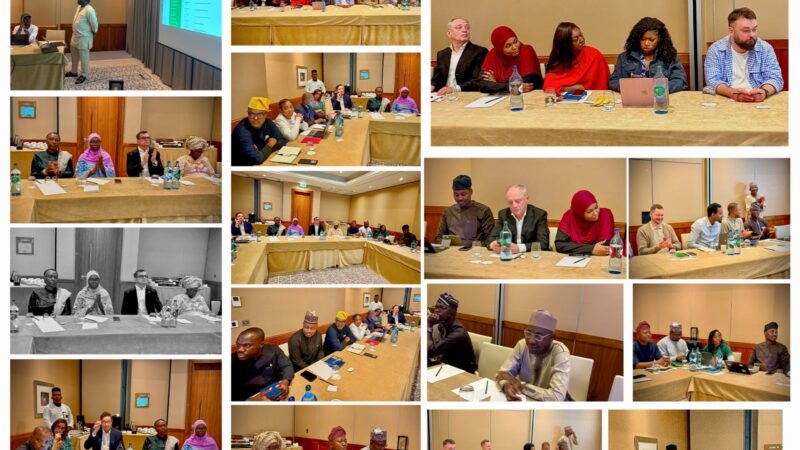
Recalling his participation in a committee meeting convened to examine the generational gap and leadership succession in the Nigeria Customs Service, Peters said he strongly defended the younger officers of the 2009 recruitment intake.
He explained that his intervention was informed by the historical evolution of the Service and the changing demands of Customs administration.
He recalled that when he joined the Service in the 1980s, there was no rank known as Deputy Comptroller. Officers progressed directly from Assistant Comptroller to Comptroller, a process that could take approximately 18 years or less.
He also observed that while the older generation operated largely in an analogue environment, younger officers had greater exposure to information and communication technology.
“While officers of our generation operated largely in an analogue environment, the younger generation is more technologically exposed and better positioned to operate in an increasingly digital Customs environment,” he said.
Peters further argued that the contribution of younger officers to revenue generation deserved greater recognition, noting that a substantial proportion of Customs revenue assessment, collection and management activities was being undertaken by officers in the field.
He also cited the appointment of former EFCC Chairman, Abdulrasheed Bawa, after fewer than 15 years in service as an example of why years of service should not automatically determine leadership capacity.
He said he was pleased that members of the committee appreciated and agreed with the position he presented.
Beyond defending the younger generation, the retired Customs chief proposed the establishment of a transition committee comprising carefully selected retired management-level officers to support leadership succession and institutional knowledge transfer.
He said such a committee, subject to the President’s discretion and the requirements of national and institutional interest, could provide mentorship and professional guidance to serving officers for a maximum period of two years.
Peters identified three fundamental principles that should guide leadership succession in the Service: competence and merit in appointments, continuity of institutional knowledge, and structured mentorship and knowledge transfer.
He stressed that allowing younger officers to lead should not translate into discarding the wealth of experience accumulated by their predecessors.
“The younger generation should be given the opportunity to innovate, introduce new ideas and take responsibility for the future of the Service. The older generation, on the other hand, should provide guidance, mentorship and institutional support where necessary, without becoming an obstacle to progress,” he said.
He added that the objective should be to build a Customs Service where different generations complement one another rather than compete against one another.
On revenue generation, enforcement and trade facilitation, Peters maintained that the three responsibilities were complementary rather than contradictory.
According to him, the primary responsibility of Customs was to collect appropriate revenue, enforce the law and facilitate legitimate international trade, adding that the challenge was achieving the right balance.
According to him, compliant importers with properly documented cargo should not suffer unnecessary delays in the name of enforcement, just as trade facilitation must not become an avenue for smuggling, false declarations, undervaluation or revenue evasion.
“My approach was anchored on risk-based enforcement, proper tariff classification, intelligence gathering and professional assessment.
“The ultimate objective should be to make legitimate trade easier while making illegitimate trade increasingly difficult,” he said.
He urged the Nigeria Customs Service to strengthen its digital infrastructure through electronic documentation, automated risk assessment, artificial intelligence, data analytics, non-intrusive inspection technology and improved information sharing among relevant government agencies.
Peters explained that historical import records, commodity descriptions, country-of-origin information and valuation databases could help Customs identify suspicious declarations before goods arrived at the ports.
This, he said, would enable low-risk consignments to enjoy faster clearance while high-risk cargoes received appropriate scrutiny.
However, he cautioned that technology alone could not replace professional expertise, particularly in tariff classification.
He explained that determining the correct classification of technical products required an understanding of their scientific composition, characteristics, properties and intended applications.
He therefore recommended an integrated approach combining technology, professional competence, intelligence gathering and continuous training.
Reflecting on life after retirement, Peters described the experience as an opportunity for renewed personal development, professional fulfilment and continued service to society.
He said his retirement from the Nigeria Customs Service had not ended his commitment to productivity, knowledge acquisition and professional advancement.
After 35 years in the Service, he returned to the academic environment, pursued further studies to doctoral level and completed his journey into the legal profession.
He also developed interests in consultancy, particularly in maritime affairs, Customs administration, estate management and other professional areas where his accumulated experience could be deployed.
“Retirement from public service should not mean retirement from productivity. One important lesson I have learnt is that retirement does not mark the end of one’s relevance. Rather, it provides an opportunity to deploy accumulated knowledge, experience and expertise in different and meaningful ways,” he said.
Peters, whose professional qualifications span Engineering, Management, Finance and Law, described himself as a lifelong student of knowledge.
He said his greatest motivation remained the conviction that education and personal development should continue throughout life.
Speaking on his consultancy activities, Peters identified Customs compliance, tariff classification, cargo documentation, valuation, import procedures, regulatory requirements, vessel-related legal issues and disputes involving government revenue assessments as some of the major challenges confronting clients.
He noted that some importers encountered difficulties because they did not fully understand the technical requirements governing their products, while others experienced problems arising from incorrect tariff classifications, inadequate documentation and misunderstandings of applicable Customs procedures.
His background in engineering and Customs administration, he explained, provided an advantage when examining technical products, particularly chemicals, industrial machinery and allied products.
He emphasised that Customs compliance should begin long before cargo arrived at the port.
“It should commence much earlier, at the planning, procurement and documentation stages of international trade,” he said.
Drawing from his 35 years of experience in revenue administration, training, enforcement, marine operations and border management, Peters said his consultancy approach was informed by the practical realities of port operations rather than purely theoretical considerations.
He maintained that professional advice must be lawful, realistic and implementable, adding that the purpose of consultancy was not merely to identify problems but to provide practical and sustainable solutions.
Beyond professional consultancy and academic pursuits, Peters disclosed that he had remained actively involved in community development, particularly in his capacity as a traditional chief in his hometown.
He also identified mentoring younger people and promoting the values of discipline, integrity and perseverance as important aspects of his post-retirement engagements.
He described the transition from the structured environment of public service to a more flexible lifestyle as one of the biggest adjustments after retirement, but said he had adapted by pursuing professional, academic and community-oriented interests.
For Peters, the central lesson of his post-retirement experience is that accumulated knowledge and professional experience should continue to serve society long after an individual leaves active public service.
He maintained that the Nigeria Customs Service must similarly ensure that the experience of retiring officers is not lost but deliberately transferred to younger personnel.
He concluded that the future strength of the Service would depend not only on the competence of its emerging leaders but also on the institution’s ability to preserve its history, encourage innovation and promote cooperation across generations.
“I would rather see a strong and progressive Nigeria Customs Service in which different generations complement one another than one in which generations compete against one another,” he said.