
Nigeria’s Investment-Grade Target: Uzoka-Anite to Unveil 2030 Roadmap
Nigeria’s Investment-Grade Target: Uzoka-Anite to Unveil 2030 Roadmap
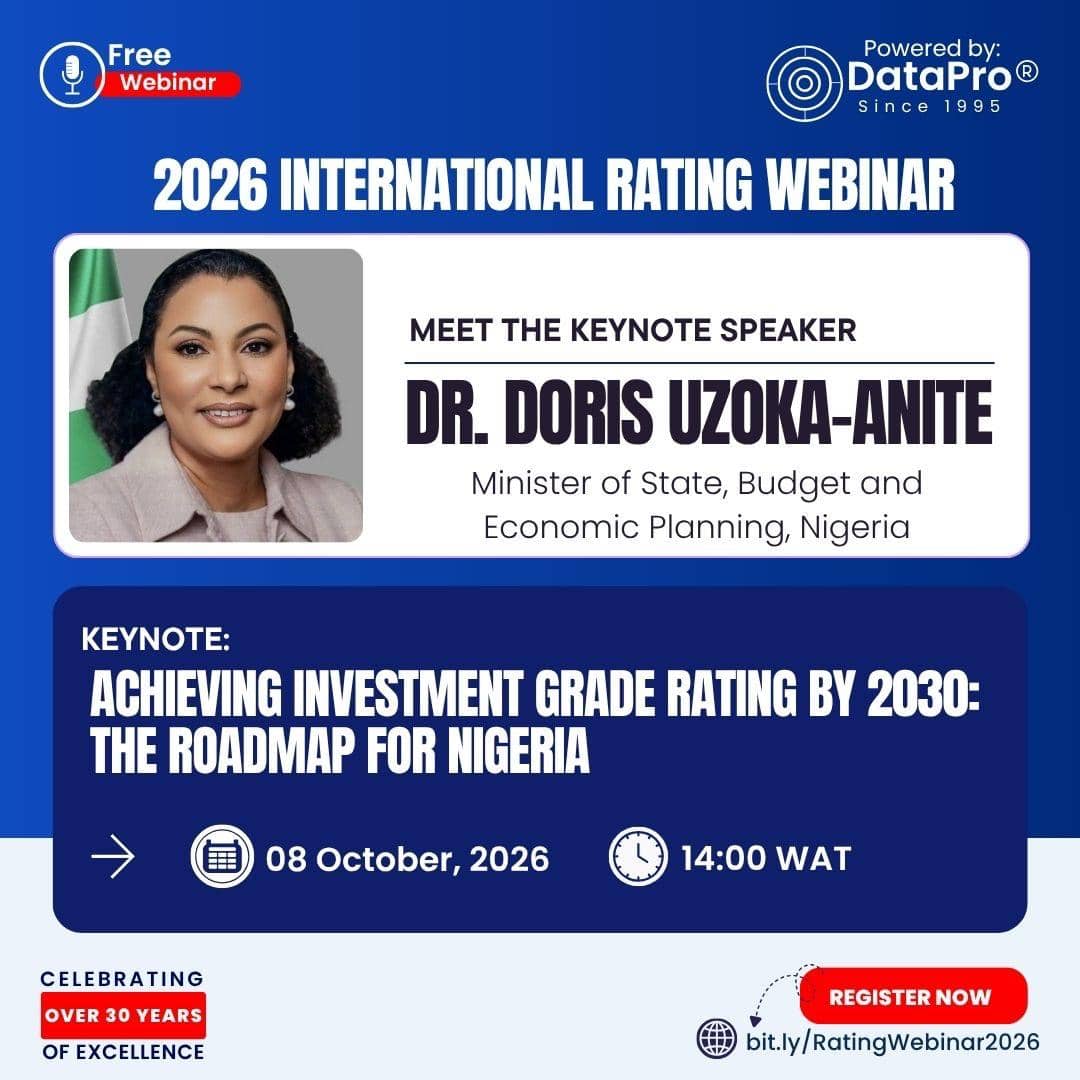
Nigeria’s Minister of State for Budget and Economic Planning, Dr. Doris Uzoka-Anite, CFA, will deliver the keynote address at DataPro’s 6th International Rating Webinar, where she is expected to outline the policy and institutional reforms required to move Nigeria towards an investment-grade sovereign credit rating by 2030.
Uzoka-Anite, an economist and public policy expert with extensive experience in economic management, investment, trade and public finance, will speak on the theme, “Achieving Investment Grade Rating by 2030: The Roadmap for Nigeria.”
The virtual event, organised by DataPro, will bring together policymakers, financial experts, economists, credit-rating professionals and international development practitioners to examine the measures required to strengthen Nigeria’s sovereign credit profile and improve investor confidence.
The minister’s participation is expected to provide insight into the government’s economic policy direction and the structural changes considered necessary to improve Nigeria’s standing in the global capital market.
Uzoka-Anite previously served as Minister of Industry, Trade and Investment and later as Minister of State for Finance, positions through which she was involved in issues relating to industrial development, investment promotion, trade policy, public finance and economic management.
Her keynote address will focus on the relationship between sound macroeconomic management, institutional effectiveness, policy credibility, and sovereign creditworthiness while examining the reforms that could help Nigeria achieve an investment-grade rating within the next four years.
According to the organisers, achieving investment-grade status requires more than improvements in headline economic indicators. It also depends on the strength of institutions, consistency of government policies, fiscal management, debt sustainability, economic diversification, and the ability to create an environment that supports long-term investment.
The webinar will also examine the broader implications of sovereign credit ratings for African economies, particularly their ability to attract domestic and international capital, reduce borrowing costs, and improve access to global financial markets.
DataPro said the expanded panel of experts would provide perspectives on Africa’s economic outlook and the factors shaping investor perceptions of the continent.
The panel will feature representatives and experts from the Ministry of Finance Incorporated (MOFI), the African Peer Review Mechanism (APRM), and leading global academic institutions.
Among the issues expected to come under discussion are sovereign credibility, institutional governance, macroeconomic policy, investment flows, and the structural reforms required to place African economies on a stronger footing in the international financial system.
The organisers said the webinar is designed to provide participants with practical insight into the forces influencing sovereign ratings and Africa’s economic trajectory, particularly at a time when governments across the continent are seeking to strengthen their fiscal positions and attract productive investment.
For Nigeria, the pursuit of an investment-grade rating by 2030 would represent a significant milestone in efforts to strengthen the country’s financial credibility, deepen access to international capital, and create a more predictable environment for investors.
The DataPro International Rating Webinar has therefore positioned the 2030 investment-grade objective as a central issue for policymakers, investors, financial institutions, and other stakeholders interested in Nigeria’s long-term economic transformation.
The sixth edition of the webinar is expected to provide a platform for a detailed discussion of how policy reforms, institutional strengthening and sound economic management can contribute to improved sovereign creditworthiness and greater investor confidence in Nigeria and across Africa.