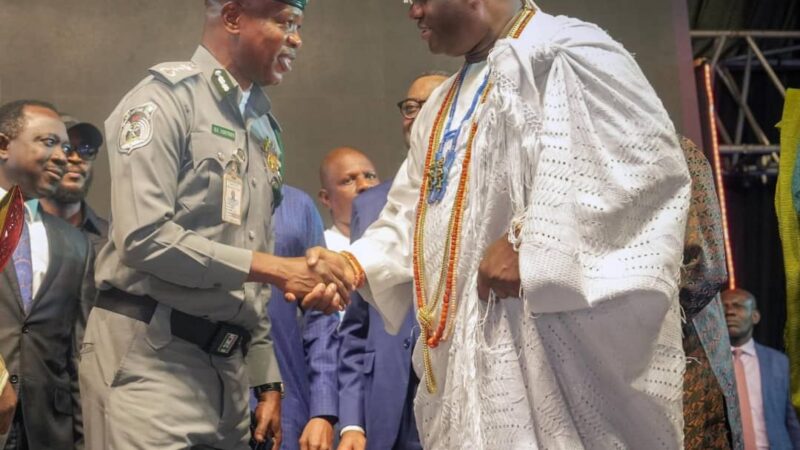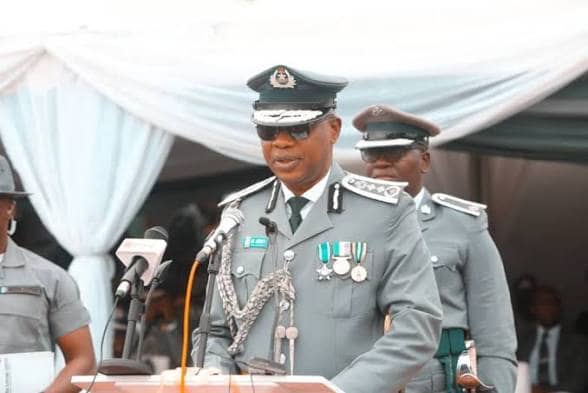

CGC Bashir Adeniyi’s Customs Reforms: Driving Revenue Growth, Securing Borders, and Elevating Nigeria’s Global Standing
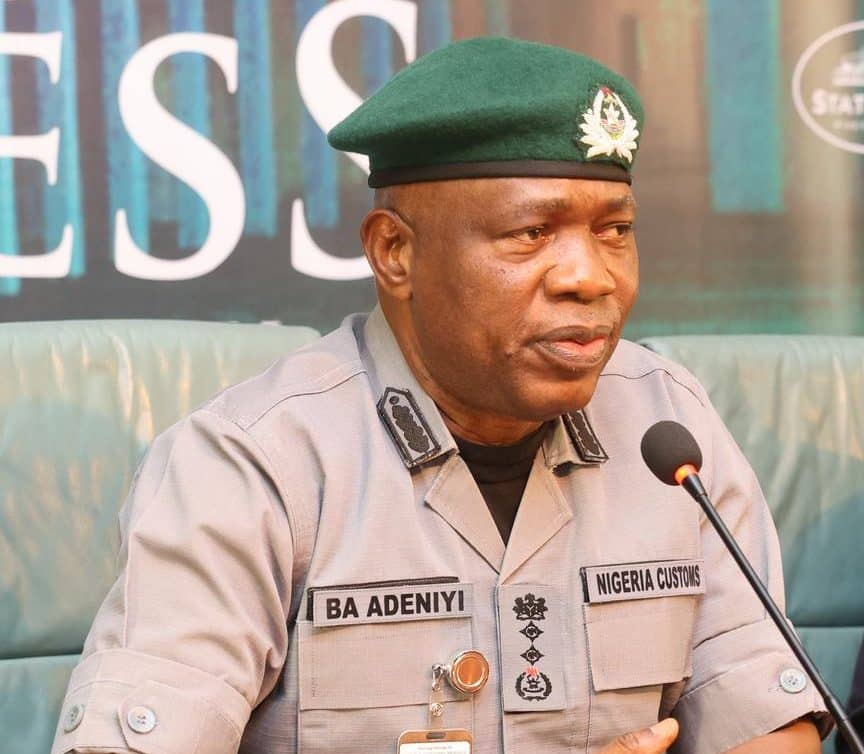
CGC Bashir Adeniyi’s Customs Reforms: Driving Revenue Growth, Securing Borders, and Elevating Nigeria’s Global Standing
By Olufemi Orioye
Since assuming office as the Comptroller-General of the Nigeria Customs Service (NCS) on June 19, 2023, Bashir Adewale Adeniyi MFR, has led one of the most remarkable transformation periods in the history of the Service. Through bold reforms, strategic leadership, enhanced international collaboration, and a renewed commitment to professionalism, Adeniyi has repositioned the Nigeria Customs Service as a critical driver of economic growth, national security, and trade competitiveness.
His administration has delivered significant improvements in revenue generation, anti-smuggling operations, trade facilitation, officers’ welfare, corporate social responsibility, and Nigeria’s international reputation. These achievements have also strengthened the implementation of President Bola Ahmed Tinubu’s Renewed Hope Agenda.
*Record Revenue Performance*
One of the most notable achievements under Adeniyi’s leadership has been the unprecedented growth in customs revenue.
Recognising Customs as a major contributor to non-oil revenue, he introduced technology-driven reforms, strengthened compliance mechanisms, improved risk management, and enhanced transparency in cargo clearance. These initiatives significantly reduced revenue leakages while improving efficiency across customs commands.
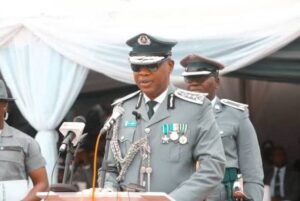
The Service has consistently surpassed its revenue targets, contributing trillions of naira into the Federation Account. The impressive performance has provided the federal government with increased fiscal resources to fund infrastructure, education, healthcare, security, and other national development priorities.
The sustained revenue growth has also demonstrated that effective institutional reforms can substantially improve government earnings without imposing additional tax burdens on citizens.

*Renewed Offensive Against Smuggling*
Border security remains one of Customs’ core responsibilities, and Adeniyi has intensified the fight against smuggling through intelligence-led enforcement.
Under his leadership, Customs have recorded numerous seizures of prohibited items, including arms and ammunition, illicit drugs, petroleum products, wildlife products, foreign rice, used clothing, and other contraband.
The Service has strengthened collaboration with other security agencies, deployed modern surveillance technologies, and improved intelligence sharing to dismantle smuggling networks operating across Nigeria’s land, sea, and air borders.
Beyond protecting government revenue, these operations have enhanced national security, safeguarded public health, and protected local industries from unfair competition.
*Promoting Trade Facilitation and Regional Integration*
While strengthening enforcement, Adeniyi has maintained a balanced approach by ensuring legitimate businesses experience faster and more efficient cargo clearance.
His administration has deepened Customs modernisation through automation, digitalisation, and simplified procedures that reduce delays at ports.
The Nigeria Customs Service has also expanded cooperation with customs administrations in Africa and beyond, promoting information sharing, coordinated border management, and implementation of international trade standards.
These efforts have improved Nigeria’s attractiveness as an investment destination while supporting the objectives of the African Continental Free Trade Area (AfCFTA), enabling Nigerian businesses to compete more effectively in regional and global markets.
*lnvesting in Officers’ Welfare*
A motivated workforce remains central to institutional success.
Recognising this, Adeniyi has prioritised the welfare of Customs personnel through improved working conditions, expanded capacity-building programmes, leadership development initiatives, and enhanced operational support.
Training has been intensified to equip officers with modern customs techniques, digital skills, intelligence gathering, and international best practices.
His people-centred leadership has boosted staff morale, strengthened professionalism, and reinforced ethical conduct across the Service.
*Enhancing Nigeria’s International Image*
Perhaps one of the defining moments of Adeniyi’s leadership came with his emergence as Chairperson of the World Customs Organization (WCO).Council
His election to lead the global customs community represents international recognition of both his professional competence and Nigeria’s growing influence within global trade governance.
As WCO Chairperson, Adeniyi now plays a leading role in shaping international customs policies on trade facilitation, border security, digital customs administration, and capacity development.
His appointment has elevated Nigeria’s profile globally, positioning the country as an active contributor to international customs reforms and strengthening investor confidence in Nigeria’s trade ecosystem.
*Advancing the Renewed Hope Agenda Through Corporate Social Responsibility*
Beyond revenue collection and border management, Adeniyi has expanded the social impact of the Nigeria Customs Service through Corporate Social Responsibility (CSR).
The Service has implemented initiatives supporting education, healthcare, community development, environmental sustainability, and humanitarian interventions across various parts of the country.
These programmes reflect the broader vision of President Tinubu’s Renewed Hope Agenda, which emphasises inclusive development, improved public service delivery, and stronger engagement between government institutions and citizens.
By investing directly in communities, the Customs Service has strengthened public trust while demonstrating that government institutions can contribute meaningfully to national development beyond their statutory mandates.
*A Legacy of Institutional Transformation*
In just over three years, Bashir Adewale Adeniyi has transformed the Nigeria Customs Service into a more efficient, transparent, technology-driven, and globally respected institution.
His leadership has combined fiscal responsibility with operational excellence, balancing revenue generation with trade facilitation, enforcement with stakeholder engagement, and institutional reforms with human capital development.
As Nigeria continues its journey towards economic diversification and regional trade leadership, the Nigeria Customs Service under Adeniyi has emerged as one of the country’s strongest public institutions, contributing not only to government revenue but also to national security, economic competitiveness, and international diplomacy.
His tenure illustrates how visionary leadership, strategic reforms, and international engagement can redefine a public institution and position it as a catalyst for national development.