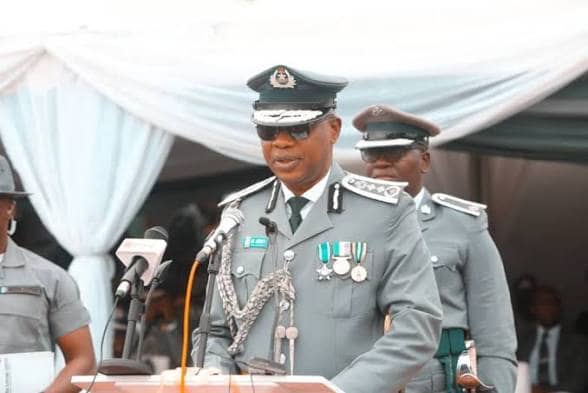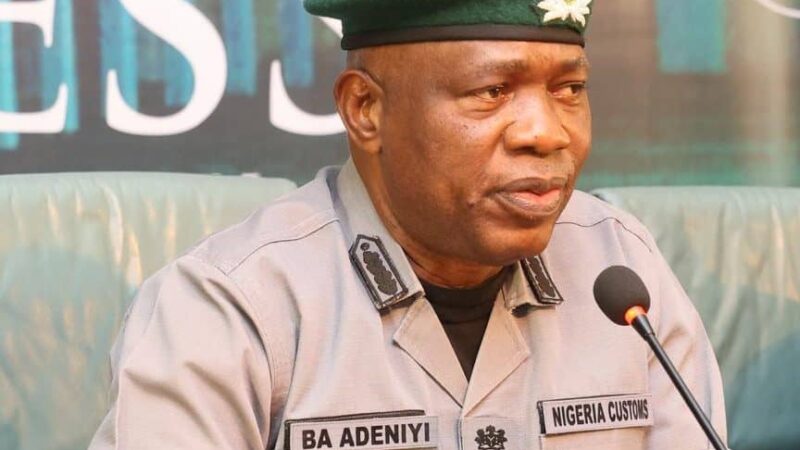

From Customs Reforms to Global Laurels: How Adeniyi’s Performance Is Elevating Nigeria’s International Standing
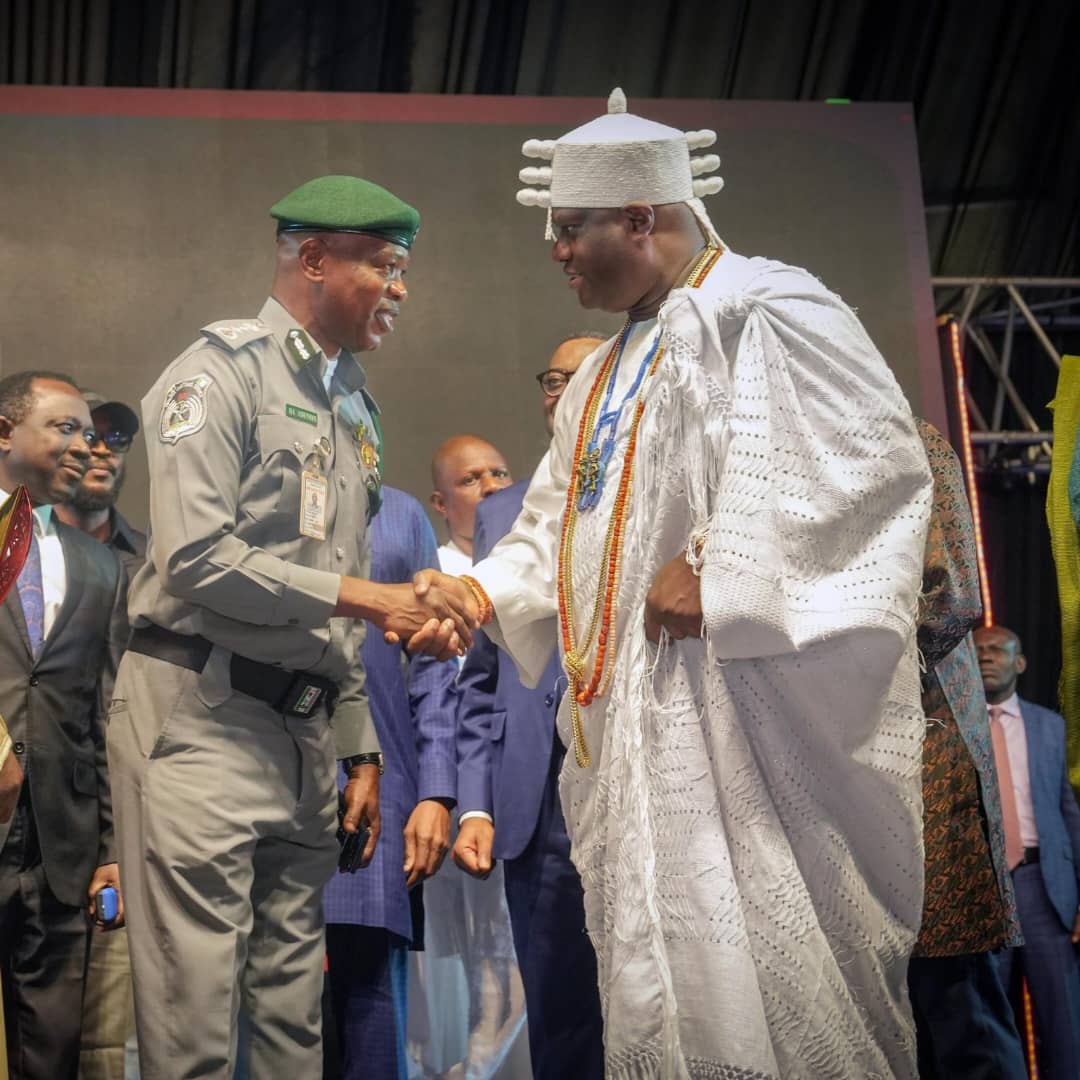
From Customs Reforms to Global Laurels: How Adeniyi’s Performance Is Elevating Nigeria’s International Standing
By Olufemi Orioye
A historic WCO election and a growing stream of national and international honours are placing Nigeria Customs and its Comptroller-General, Bashir Adewale Adeniyi, MFR, at the centre of global recognition
When Bashir Adewale Adeniyi took over as Comptroller-General of the Nigeria Customs Service in 2023, he inherited an institution under pressure to raise revenue, modernise its operations and restore confidence among businesses and the wider public.
Two years later, the world of Customs administration had begun to take notice.
In June 2025, Adeniyi achieved a historic milestone when he was elected Chairperson of the Council of the World Customs Organization (WCO), becoming the first Nigerian to occupy the position and the first African to hold the Council chairmanship since 2000. The WCO Council brings together the heads of 186 Customs administrations, making the election one of the strongest international endorsements of Nigeria’s growing influence in global customs affairs.
The significance of that election extends beyond the man who occupies the chair.
It represents international recognition of Nigeria’s capacity to contribute to the future of global customs administration at a time when trade is being reshaped by digitalisation, supply-chain disruptions, border security concerns and the expansion of continental trade under the African Continental Free Trade Area.
More importantly, Adeniyi’s emergence on the global stage has coincided with a remarkable period of institutional performance at the Nigeria Customs Service.
Under his leadership, the NCS moved from collecting N3.206 trillion in 2023 to N6.105 trillion in 2024 before recording N7.28 trillion in 2025. The Service has simultaneously accelerated digitalisation, strengthened intelligence-led enforcement, expanded trade-facilitation programmes, and introduced initiatives aimed at making its operations more transparent and efficient.
The consequence has been a growing stream of awards, commendations, and professional honours for both the Comptroller-General and the institution he leads.
What makes the accolades particularly significant is their diversity. They have come from international customs authorities, Nigerian government and professional bodies, technology organisations, the maritime industry, and the media.
Taken together, they tell a story larger than a catalogue of awards.
They point to a Nigerian institution whose reforms are beginning to command attention beyond the country’s borders and to a public servant whose performance has increasingly become associated with Nigeria’s rising profile in global Customs administration.
The award that changed the narrative
Adeniyi’s election to lead the WCO Council was the defining moment in this emerging recognition.
The WCO is the international body responsible for developing customs standards and strengthening cooperation among customs administrations worldwide. Its Council is the organisation’s highest decision-making body.
For Nigeria to produce its first chairperson is therefore a diplomatic and professional achievement of considerable significance.
It also offers a powerful indication of how perceptions of the NCS have evolved.
Nigeria is no longer simply a participant in international customs discussions. Through Adeniyi’s leadership, it has acquired a stronger voice in shaping them.
His elevation came against the backdrop of reforms at home that have placed revenue performance, technology, trade facilitation, and professionalisation at the centre of Customs administration.
The international recognition, in that sense, mirrors the domestic transformation.
Performance behind the plaudits
Awards are rarely meaningful without measurable achievements behind them.
In Adeniyi’s case, the most visible evidence is the extraordinary improvement in revenue collection.
The NCS’s N6.105 trillion collection in 2024 exceeded its target by more than N1 trillion. In 2025, the service went further, generating N7.28 trillion.
But revenue is only one part of the story.
The Service has also expanded digital customs processes, deployed the B’Odogwu Unified Customs Management System, strengthened risk management, and promoted the Authorised Economic Operator programme.
These initiatives are designed to make legitimate trade faster and more predictable while enabling customs to concentrate enforcement on high-risk transactions.
That combination of revenue growth and trade facilitation is central to understanding why the NCS has attracted increasing professional recognition.
Technology becomes a source of recognition
The service’s technology transformation has itself attracted awards.
In 2024, the Nigeria Customs Service was recognised as the Best Federal MDA in Innovative Use of Technology, while Adeniyi received a Distinguished GOVTECH Trailblazers Award.
The honours recognised the growing use of digital tools to improve customs processes, revenue collection, and national security.
For an institution historically associated with paperwork and physical inspections, the shift towards technology represents a fundamental change in operating culture.
It is also one of the areas in which Nigeria’s Customs administration is increasingly able to share experience with its counterparts around the world.
Recognition at home
The international accolades have been matched by recognition within Nigeria.
Professional organisations, the maritime industry, and media bodies have increasingly honoured Adeniyi for his contributions to revenue generation, trade facilitation, anti-smuggling operations, and institutional reform.
Maritime media recognition and endorsements
In an unprecedented show of industry recognition, more than 1,000 maritime journalists drawn from eight professional associations converged in 2025 under the aegis of the National Association of Maritime Journalists (NAMJ) to honour Comptroller-General of Customs, Bashir Adewale Adeniyi, for his transformative leadership of the Nigeria Customs Service.
The scale of the gathering was remarkable, not only because of the number of journalists involved, but because it represented a rare convergence of the maritime media community around the performance of a public-sector leader.
For the journalists, the recognition was a response to what they described as far-reaching reforms that have reshaped the Customs administration under Adeniyi, particularly the Service’s impressive growth in revenue generation, improved welfare of Customs personnel and a significantly stronger relationship between the NCS and the maritime media.
The event effectively became a vote of confidence from one of the key stakeholder groups that has closely followed the activities of the Customs Service and reported its impact on Nigeria’s maritime economy.
The journalists said Adeniyi’s leadership had demonstrated that an efficient Customs administration requires more than revenue collection and enforcement. It also depends on professional personnel, effective stakeholder engagement, transparent communication, and a media that is treated as a partner in national development.
For the maritime media, one of the most significant aspects of Adeniyi’s tenure has been his recognition of journalists as stakeholders in the Customs ecosystem rather than merely observers of its activities.
His administration’s increased engagement with the media has provided greater access to information, improved understanding of customs policies, and created a more constructive platform for reporting developments within the service.
The journalists, therefore, viewed the 2025 gathering as both a celebration of Adeniyi’s achievements and an acknowledgement of the importance he has attached to the media’s contribution to the maritime industry and the Nigerian economy.
They expressed appreciation to the Comptroller-General for consistently recognising the role of maritime journalists in promoting transparency, accountability, and public understanding of Customs operations.
The gathering also underscored the growing influence of maritime journalism in Nigeria’s economic discourse. By bringing together practitioners from eight associations, NAMJ demonstrated the capacity of the sector’s media community to speak collectively on issues affecting the maritime industry.
For the journalists, their appreciation of Adeniyi is expected to endure beyond the ceremony.
They pledged to continue supporting initiatives that strengthen the Nigeria Customs Service, promote the growth of the maritime industry, and advance the wider economic interests of Nigeria.
In their view, Adeniyi’s most enduring contribution to the relationship may be that he has helped redefine the place of maritime journalists within the industry—recognising them not simply as reporters of events, but as critical stakeholders whose work helps explain, scrutinise and promote the sector’s contribution to national development.
The 2025 gathering thus became more than an award ceremony. It was a powerful industry statement: that when institutional reform produces measurable results and leadership recognises the value of its stakeholders, appreciation can transcend professional boundaries and become a collective endorsement.
Also, the latest is the MARCON Lifetime Achievement Award, announced in 2026 by the Maritime Correspondents’ Organisation of Nigeria.
Coming from journalists and professionals who closely follow the nation’s ports and maritime economy, the recognition underscores the visibility of the reforms within the sector.
It also demonstrates how the narrative around customs is changing from an agency primarily associated with revenue collection and enforcement to an institution increasingly regarded as a driver of economic efficiency.
More than personal accolades
Yet the most important question is not how many awards Adeniyi has received.
It is what those awards say about Nigeria.
His election to the WCO Council has given the country a stronger platform in global customs policy. His technology and trade-facilitation achievements have strengthened the professional reputation of the NCS. The steady stream of local recognition has reinforced the perception that the reforms are producing measurable results.
The distinction between personal recognition and institutional recognition is therefore important.
Adeniyi may receive the plaque, medal, or certificate, but the reputation being built is increasingly that of the Nigeria Customs Service and, by extension, Nigeria itself.
Turning recognition into influence
The real value of international recognition lies in what comes after the ceremony.
A Nigerian chairing the WCO Council provides an opportunity to influence conversations around customs modernisation, digital trade, border security, and global supply chains.
It also gives Nigeria a platform to advance African priorities within an international system that is becoming increasingly important to the continent’s economic integration.
For a country seeking greater influence in global economic affairs, this matters.
The rise of Adeniyi on the international Customs stage demonstrates that Nigeria can provide leadership and expertise in areas critical to the future of global commerce.
The emerging Adeniyi legacy
From the MFR national honour and earlier professional recognitions to the WCO Award of Excellence, technology-sector honours, maritime industry awards and, most significantly, his election to lead the WCO Council, Adeniyi’s career has accumulated an extraordinary range of laurels.
But the awards are best understood not as isolated personal achievements but as milestones along a broader institutional journey.
The transformation of the Nigeria Customs Service has given Adeniyi a platform from which Nigeria is increasingly being recognised internationally.
And that may ultimately prove to be the most consequential award of all: a stronger global reputation for Nigeria as a country capable of producing institutions and professionals that can compete, lead and influence at the highest levels of international economic governance.
The plaques and certificates may carry Adeniyi’s name.
The prestige, however, increasingly belongs to Nigeria.