
Bukola Olopade: From Ogun’s Grassroots to a National Vision for Sports and Youth Development
Bukola Olopade: From Ogun’s Grassroots to a National Vision for Sports and Youth Development
By Olufemi Orioye
In Nigeria, where the conversation around youth empowerment is often dominated by education, employment and entrepreneurship, sports remains one of the most powerful but sometimes underutilised tools for transforming the lives of young people.
For Honourable Bukola Olawale Olopade, however, sports has never been merely about winning medals or lifting trophies. It is a vehicle for youth development, talent discovery, economic empowerment, social inclusion and national pride.
His journey from Commissioner for Youth and Sports in Ogun State to Director-General of the National Sports Commission (NSC) represents a progression from grassroots sports administration to a national responsibility at a time when Nigeria is seeking to reposition sports as an industry and a contributor to economic development.
Olopade served as Ogun State Commissioner for Youth and Sports beginning in 2006, spending eight years in the position. His tenure established him as one of the prominent figures associated with sports development in the state and the wider South-West. His approach combined government policy, grassroots participation, youth empowerment and private-sector involvement.
A philosophy rooted in grassroots development
Perhaps the most enduring feature of Olopade’s sports philosophy is his emphasis on grassroots development.
His belief is straightforward: Nigeria cannot consistently produce world-class athletes if young people are not given opportunities to compete, develop and be identified from an early age.
That philosophy remains central to his current national agenda. In 2026, Olopade called for more regular grassroots competitions, arguing that young athletes should not have to wait for major national championships before getting competitive exposure.
He advocated a system capable of producing world-class athletes from as early as age 12, with federations organising several competitions throughout the year.
The significance of this position goes beyond sports. Regular competitions give young people purpose, discipline, mentorship and the opportunity to discover talents that might otherwise remain hidden.
A child who finds an opportunity through athletics, football, basketball, boxing, swimming or another sport can acquire not only sporting skills but also confidence, discipline and a pathway to education, employment and international opportunities.
Building bridges between sports and the private sector
Another important aspect of Olopade’s contribution has been his understanding that government alone cannot finance or develop Nigeria’s sports industry.
Before becoming NSC Director-General, he built a reputation in the private sports sector, particularly through Nilayo Sports Management, and was associated with major road races including the Lagos City Marathon and Abeokuta 10km race.
His involvement helped demonstrate how sports could become a commercially viable platform capable of attracting corporate sponsorship, tourism, media attention and international participation.
The Lagos City Marathon, in particular, has become one of the most visible sporting events in Nigeria, while his involvement in marathon events across the country has helped promote athletics beyond traditional stadium competitions.
This public-private partnership model is important because the future of Nigerian sports cannot depend entirely on annual government budgets. Sponsorship, sports marketing, broadcasting, merchandising, sports tourism and professional management all have roles to play in building a sustainable sports economy.
Ogun as a laboratory for his sports vision
Olopade’s years in Ogun State gave him an opportunity to demonstrate his ideas at the sub-national level.
Years later, his connection with Ogun’s sporting development continued when he was appointed Chairman of the Local Organising Committee for the 22nd National Sports Festival hosted by the state.
The appointment was significant. The National Sports Festival is one of Nigeria’s most important platforms for discovering young athletes, and Olopade’s experience made him a natural choice to lead the organising committee.
The Gateway Sports Festival also provided an opportunity to connect sports with infrastructure development. Facilities were upgraded and new sporting facilities developed as part of preparations for the event, reinforcing the idea that hosting major competitions can leave behind infrastructure and opportunities that benefit communities long after the closing ceremony.
For Olopade, therefore, a sports festival is not simply a two-week event. Properly planned, it can become a catalyst for infrastructure, tourism, youth engagement and long-term talent development.
From Ogun to the National Sports Commission
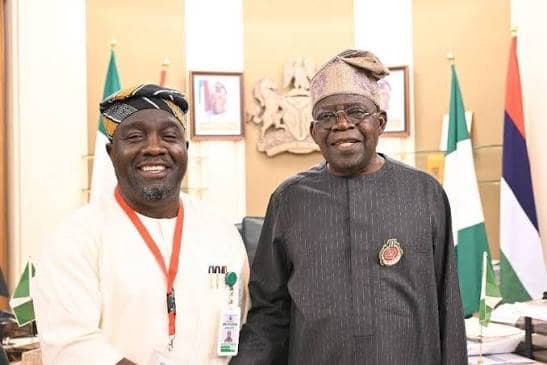
In November 2024, President Bola Ahmed Tinubu appointed Olopade as Director-General of the National Sports Commission, following the restructuring of the federal sports administration.
The appointment brought to the national stage an administrator whose career had already been closely associated with sports entrepreneurship, grassroots development and event management.
At the NSC, the challenge is considerably bigger.
Nigeria possesses enormous sporting talent, but the country has struggled with inadequate facilities, inconsistent competitions, athlete welfare concerns and the absence of a sufficiently strong sports business ecosystem.
Olopade’s response has been to advocate a more structured and professional approach to sports development.
His current vision includes taking sporting facilities closer to communities rather than concentrating investment only on major stadia. In September 2026, he said the NSC was working on neighbourhood sports facilities while supporting states to develop and rehabilitate their own infrastructure.
This approach is particularly relevant to youth development because talent is often discovered in schools, communities and local competitions rather than in elite training centre
Giving young Nigerians a pathway
One of the greatest contributions sports can make to Nigeria is to create pathways for young people.
For a country with a very large youth population, sports can provide opportunities in areas far beyond athletic competition. Coaching, sports medicine, physiotherapy, sports journalism, event management, marketing, broadcasting, facility management, fitness, data analysis and sports technology are all parts of the modern sports economy.
Olopade’s emphasis on professionalising sports therefore carries implications beyond the athletes who stand on podiums.
It suggests a broader understanding of sports as an industry capable of creating jobs and businesses while simultaneously developing talen
His advocacy for private-sector participation is particularly important in this regard. The corporate world can provide sponsorship and investment, while sports administrators provide structure and credible platforms through which those investments can produce measurable results.
Championing youth athletics
Olopade’s commitment to young athletes has also been visible in his support for age-grade competitions.
In 2025, while addressing the Confederation of African Athletics’ U-18/U-20 Championships in Abeokuta, he emphasised the importance of developing the next generation of athletes. More than 700 athletes participated in that age-grade competition, demonstrating the depth of young sporting talent available when opportunities are created.
The following year, he commended the RIYE Under-15 Athletics Circuit in Ogun State, which involved more than 2,000 athletes from over 200 schools during its zonal qualifiers.
That kind of initiative reflects the philosophy he has consistently promoted: identify children early, expose them to competition, provide coaching and create a pathway from the grassroots to national and international competition.
Beyond medals: sports as nation-building
There is another dimension to Olopade’s contribution that deserves attention.
Sports is one of the few sectors capable of bringing Nigerians together irrespective of ethnic, religious, political or social differences.
When Nigerian athletes compete internationally, the country speaks with one voice. When young people from different states meet at national competitions, they develop friendships and networks that transcend geographical boundaries.
Olopade’s emphasis on sports as a tool for empowerment, unity and economic growth reflects this broader understanding of the sector. His recognition as the 2025 Southwest Sports Icon of the Year was partly linked to his long-standing contributions to sports development and his efforts to strengthen the sports ecosystem.
Olopade is a sports administrator who has consistently demonstrated his appreciation for Nigerians who have contributed immensely to the development of sports and sporting activities in the country. His commitment to recognising and celebrating those who have played significant roles in advancing the sector reflects his belief that the progress of Nigerian sports is a collective achievement.
With the way things are unfolding under his leadership, Olopade is clearly focused on repositioning sports as a veritable tool for youth empowerment, talent development and revenue generation for the Federal Government. His vision goes beyond the traditional perception of sports as merely a source of entertainment and national pride.
He is working towards building a sports ecosystem that can create employment opportunities for young Nigerians, attract private-sector investment, generate sustainable revenue for government and contribute meaningfully to the nation’s socio-economic development.
Through greater emphasis on grassroots talent discovery, improved sporting infrastructure, professional management and increased private-sector participation, Olopade is seeking to make sports a major contributor to Nigeria’s economic growth while providing millions of young people with opportunities to discover and fulfil their potential.
The 2024 Gateway Sports Festival, for which Olopade served as Chairman of the Local Organising Committee, will continue to occupy a special place in the history of sports development in Nigeria. The festival provided a remarkable platform for the effective organisation of a major national sporting event, the upgrade of sporting facilities, the discovery of emerging talents and the restoration of the glamour and excitement associated with the biennial National Sports Festival.
Under Olopade’s leadership, the festival demonstrated how a well-planned sporting event could go beyond competition to create a lasting legacy in infrastructure, talent development and youth engagement. The quality of organisation and attention to detail set a standard that will remain a reference point for future editions of the National Sports Festival.
Furthermore, Olopade’s presence at the National Sports Commission (NSC) has brought a new dimension to sports administration in Nigeria. His leadership has contributed to the ongoing repositioning, restructuring and rebounding of the sector, with greater emphasis on grassroots development, talent discovery and the creation of opportunities for young Nigerians to pursue careers in sports.
His vision is increasingly positioning sports as more than just a source of medals and entertainment. Under his leadership, the sector is being promoted as an avenue for youth empowerment, job creation, talent development, national unity and international recognition. The objective is to build a system capable of discovering and nurturing the talents that will represent Nigeria on the global stage and further enhance the country’s standing in the comity of nations.
In recognition of the enormous support provided by the Ogun State Governor, Prince Dapo Abiodun, towards the successful hosting of the 2024 National Sports Festival, Olopade has, on several occasions, publicly commended the governor for his commitment to sports development.
The governor’s support was instrumental to the successful delivery of the festival, particularly in the areas of infrastructure, facility upgrades, logistics and overall coordination. Olopade has consistently acknowledged this support, expressing pride in the governor’s determination to ensure that Ogun State hosted a National Sports Festival that met the expectations of athletes, officials, spectators and Nigerians at large.
Indeed, the achievements of Bukola Olopade in the sports arena have continued to reflect the enduring spirit and reputation of Ogun State.
His journey from the Ogun State sports administration to the leadership of the National Sports Commission demonstrates how an individual with vision, passion and administrative capacity can move from developing sports at the state level to influencing the sector at the national level.
With his vast experience in sports administration, youth development and grassroots sports promotion, President Bola Ahmed Tinubu should consider appointing Bukola Olopade as Minister of Sports and Youth Development.
Olopade has demonstrated a strong understanding of how sports can be harnessed for recreation and national development
His appointment would bring fresh ideas, professionalism and innovative strategies to the sector. With his proven experience and passion for sports development, Olopade has the capacity to transform the ministry, reposition Nigeria’s sports industry and create greater opportunities for young Nigerians.
For many people in Ogun State, Olopade’s accomplishments represent yet another demonstration of the state’s tradition of producing individuals who excel wherever they find themselves.
And in the true spirit of Ogun, his record reinforces the popular saying: Omo Ogun no dey carry last.