

Hadiza Bala Usman, Warredi, Boboye Call for Holistic Port Modernization to Secure Nigeria’s Economic Future
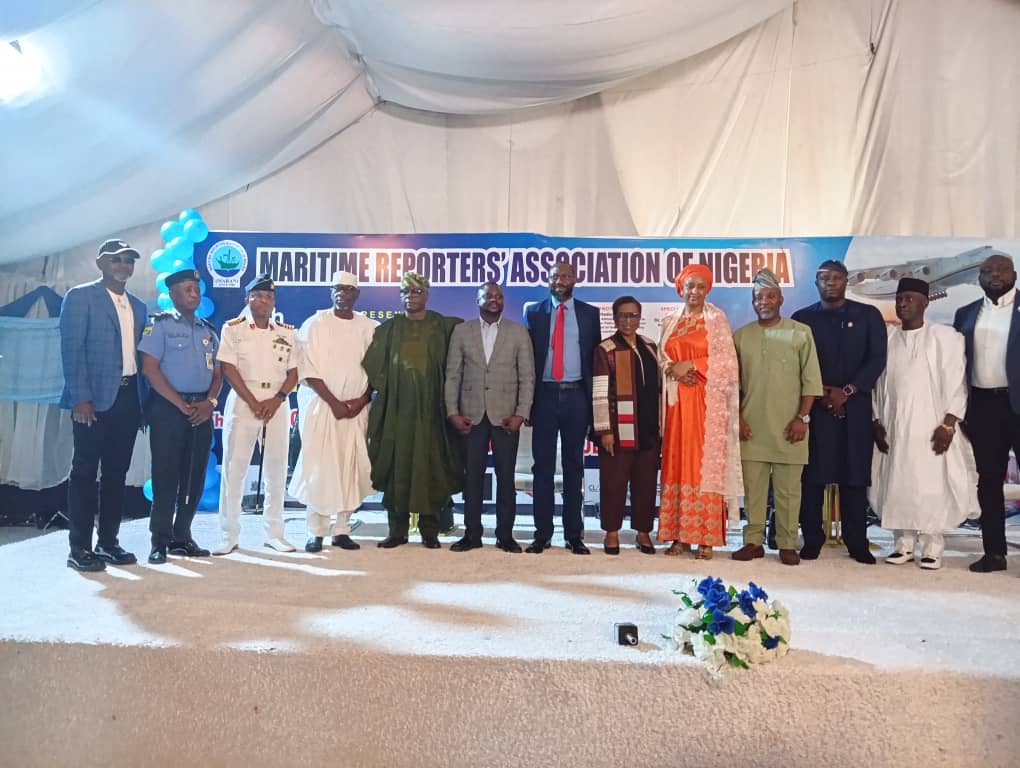
Hadiza Bala Usman, Warredi, Boboye Call for Holistic Port Modernization to Secure Nigeria’s Economic Future
Former Managing Director of the Nigerian Ports Authority (NPA), and Special Adviser to the President on Policy and Coordination, and Head, Central Results Delivery Coordination Unit (CRDCU), Hajiya Hadiza Bala Usman, Captain (Dr.) Warredi Enisouh, Executive Director, Operations and Technical, Tantita, and former CEO/Corps Marshall, Federal Road Safety Corps and President, Chartered Institute of Logistics and Logistics (CILT), Boboye Oyeyemi, have called for holistic approach to secure Nigeria’s economic future.

Speaking at the 4th Maritime Reporters Association of Nigeria Annual Maritime Lecture (MAMAL 2026) in Lagos on Thursday as Guest Speaker, Bala Usman, urged policymakers and industry stakeholders to confront the broader economic implications of port inefficiencies, warning that Nigeria’s ability to become West Africa’s principal trade and logistics hub depends on urgent reforms.
Bala Usman emphasized that port costs ripple through the entire economy — from the price of rice in local markets to the competitiveness of Nigerian manufacturers and exporters. “Ports are among the few pieces of infrastructure whose inefficiency taxes the entire economy simultaneously,” she said.
She outlined six dimensions of port modernization: physical infrastructure, reliable equipment, digitalization, institutional reform, human capital development, and commercial modernization. Progress, she argued, must be measured not by expenditure but by results such as vessel turnaround time, cargo handling productivity, and logistics cost reduction.
Recent improvements were highlighted, including Apapa and Tin Can Island ports ranking among the world’s most improved in the World Bank’s Container Port Performance Index. Cargo throughput rose by more than 25% to 129 million tons, with revenue surpassing targets. Yet Bala Usman cautioned that many cargo owners still face delays and high costs.
The most sensitive issue remains port charges. Clearing a 20-foot container at Apapa costs ₦14–15 million, nearly double the reported cost at Cotonou. Bala Usman criticized duplication of fees and called for transparency, noting that “every charge should have a clear legal basis, published rates, and an accessible review mechanism.”
She warned that high cumulative costs risk diverting Nigerian-bound cargo to rival ports, resulting in lost tax revenue and jobs. To secure Nigeria’s role as a regional hub, she stressed the need for efficient multimodal corridors — rail, roads, dry ports, and inland logistics facilities — integrated with urban planning in Lagos and beyond.
“Modernization must improve the entire logistics chain,” Bala Usman concluded, framing port reform as central to Nigeria’s diversification agenda and its ambition to lead West and Central Africa in trade and distribution.
She outlined a sweeping ten‑point agenda to overhaul Nigeria’s port system, stressing that modernization must be treated as a unified system rather than piecemeal reforms.
According to the former NPA boss, infrastructure, tariffs, technology, and regulation must work together to reduce the total cost of trade and strengthen Nigeria’s position as a regional gateway.
Her proposals include:
– Completing port modernization projects with transparent timelines and procurement integrity.
– Linking investments to measurable outcomes such as vessel turnaround time, cargo throughput, and logistics speed.
– Maintaining a predictable tariff regime based on published methodology and international benchmarks.
– Accelerating digital reforms through the National Single Window and risk‑based inspections.
– Integrating port community systems to eliminate repeated data submissions.
– Streamlining regulation by removing duplication and assigning clear accountability.
– Improving hinterland connectivity with stronger rail and road links.
– Setting transparent concession obligations with enforceable performance reviews.
– Attracting regional and transit cargo via efficient trade corridors beyond national borders.
– Publishing annual benchmarks on cost, speed, reliability, and customer experience.
Bala Usman underscored the role of maritime journalism in holding operators and policymakers accountable, urging evidence‑based scrutiny of tariffs, concession agreements, and cargo movement efficiency.
“Behind every statistic is a business, behind every delay is a cost, and behind every efficiency gain is an opportunity for national growth,” she said.
She warned that no single reform can transform Nigerian ports, but a coordinated modernization agenda could lower logistics costs, boost manufacturing and exports, attract investment, and increase Nigeria’s share of African trade.
Bala Usman’s call is clear — Nigeria’s ports must deliver predictable cargo movement, digitized documentation, competitive costs, and enforceable performance standards if the country is to become a true continental trade hub.
Captain Warredi Enisouh who was the Chairman of the occasion, raised concerns about Nigeria’s approach to port modernization, warning that the country risks falling further behind regional competitors like Togo if reforms remain concentrated in Lagos alone.
Enisouh highlighted how Togo strategically deepened its port to over 20 meters, enabling it to handle mega-container ships carrying up to 24,000 TEUs (twenty-foot equivalent units). By contrast, Nigerian ports still largely accommodate vessels averaging 4,500 TEUs, limiting competitiveness.
“The difference between operating a 24,000 TEU ship with 19 crew and a 4,500 TEU ship with 19 crew was $1,000 a day. Why would I not invest more in the 24,000 TEU compared to the 4,500 TEU?” Enisouh explained.
Key Challenges Identified
– Fragmented Administration: Nigerian shipping agents must navigate multiple agencies — NIMASA, Customs, NPA — slowing operations. Togo, by contrast, offers a one-stop shop system.
– Automation Gap: While ports like Los Angeles deploy AI-driven robotics for stacking and trucking, Nigerian ports remain heavily manual, with congestion worsened by checkpoints and poor road infrastructure.
– Infrastructure Strain: Heavy reliance on Lagos roads and bridges creates bottlenecks, undermining port efficiency regardless of internal automation.
– Untapped Potential: Nigeria has several ports — including Lekki Deep Sea Port, Warri, and Port Harcourt — but many remain underdeveloped or limited in scope.
Enisouh noted that within just two years of implementing its modernization plan, Togo overtook Nigeria in maritime trade volumes. He urged Nigeria to adopt a holistic strategy, including investment in barging systems to reduce truck dependence and road accidents.
He also recalled that Nigeria briefly gained ground during Hadiza Bala Usman’s tenure as Managing Director of the Nigerian Ports Authority (NPA), though the momentum was not sustained.
Enisouh’s remarks underscore a critical point: port modernization cannot be confined to the gates of Apapa or Tin Can Island. Without synchronized improvements in exit systems, infrastructure, and regional planning, Nigeria’s ports risk remaining congested and uncompetitive in the global shipping market.
The CILT’s Boboye called for a shift in Nigeria’s maritime strategy, urging stakeholders to look beyond port modernization and focus on transforming the entire logistics chain.
Boboye commended the association for sustaining a platform that fosters national dialogue on maritime issues. He stressed that while modernizing ports is necessary, it is not sufficient to guarantee competitiveness.
“The real question is: what happens after the vessel berths and the container leaves the terminal? Can that cargo clear customs quickly? Can it move efficiently by road, rail, or inland waterways? Can it reach the factory, warehouse, or market at a predictable cost?” he asked.
He highlighted the emergence of the Lekki Deep Sea Port and growing cargo throughput as positive developments but warned that infrastructure alone does not create competitiveness. He emphasized the need for an integrated logistics ecosystem where ports connect seamlessly with customs, roads, rail, inland waterways, dry ports, warehouses, and industrial clusters.
He also underscored the importance of the National Single Window and community systems, advocating for a “one digital identity” for containers to ensure traceable cargo journeys.
On charges, Boboye cautioned against focusing narrowly on port tariffs, noting that importers and exporters ultimately face the total cost of moving cargo — including storage, demurrage, haulage, and the cost of uncertainty. He called for transparency, predictable charges, and measurable service standards.
The transport expert further urged Nigeria to embrace multimodality, reducing dependence on roads by leveraging rail and inland waterways. He argued that modern logistics systems require flexibility across multiple transport modes, supported by dry ports and logistics parks.
With Nigeria’s population of 240 million, vast coastline, and access to the African Continental Free Trade Area, Boboye said the country has the potential to become a major logistics gateway for West and Central Africa.
“We must embark on a fundamental transition: from port modernization to logistics transformation, from terminals to networks, from documents to data, from dependence to multimodality, and from import bias to export competitiveness,” he concluded.
He commended MARAN for advancing the maritime and logistics conversation, stressing that the media plays a vital role in helping Nigerians understand how logistics impacts the price of goods, competitiveness, employment, and economic growth.