
Budget Office: ₦1.3bn PFIPC Allocation Originated from Buhari-Era Records, No Funds Released
Budget Office: ₦1.3bn PFIPC Allocation Originated from Buhari-Era Records, No Funds Released
The Budget Office of the Federation has revealed that the controversial Presidential Foreign Intervention Promotion Council (PFIPC), now declared a fake government agency, was captured in official records inherited from the administration of former President Muhammadu Buhari.
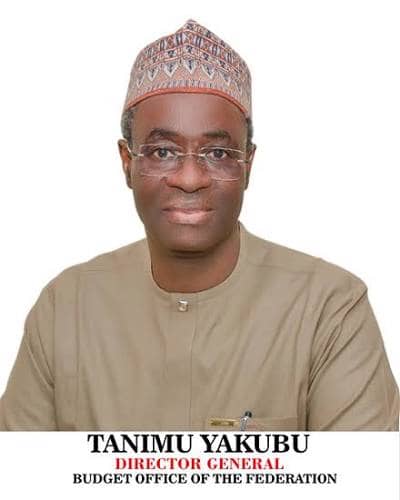
Director-General of the Budget Office, Tanimu Yakubu, disclosed this while appearing before the House of Representatives Ad-hoc Committee investigating how the council was included in the 2026 Appropriation Act.
Yakubu explained that although the agency received a budgetary allocation of ₦1.302 billion, none of the funds was released because mandatory financial and administrative approvals required for disbursement were never granted.
According to him, the PFIPC’s institutional trail could be traced to the Presidential Economic Advisory Council (PEAC), inaugurated by former President Buhari on October 9, 2019.
He said that before preparations for the 2026 budget commenced, the Office of the Accountant-General of the Federation had already assigned the council an administrative budget code, while the Office of the Head of the Civil Service of the Federation had approved its authorised establishment and issued a recruitment waiver.
Yakubu stressed that the Budget Office neither created nor approved the establishment of the council but merely processed official documents submitted by relevant government institutions.
“The Budget Office did not create the Council. It did not assign its code. It did not approve its establishment. It did not grant its recruitment waiver. It received official instruments and did what the law required of it by assessing their fiscal implications,” he said.
He explained that the PFIPC initially proposed ₦3.85 billion for personnel costs, but the Budget Office reduced the figure to ₦802.98 million after applying the approved public service salary structure, authorised staff strength and existing costing guidelines.
The final appropriation comprised ₦802.98 million for personnel, ₦200 million for overhead costs, and ₦300 million for capital expenditure, bringing the total allocation to ₦1.302 billion.
Despite the appropriation, Yakubu maintained that no payment was made because the Budget Office withheld Financial Clearance, a statutory requirement for recruitment, payroll enrolment, and salary payments.
He noted that the clearance could not be issued because the 2026 Appropriation Bill only became law on March 31, 2026, while the National Salaries, Incomes and Wages Commission had yet to certify the council’s proposed staffing and remuneration structure.
“There was no financial clearance. There was no lawful recruitment. There was no payroll enrolment. There was no salary payment. Not one kobo of the personnel provision could lawfully have been drawn, and none was drawn,” he stated.
Yakubu further explained that the ₦200 million overhead allocation was never released because treasury warrants and cash backing from the Federal Ministry of Finance were not issued, while the ₦300 million capital allocation remained untouched as no procurement plan, tender approval or Certificate of No Objection from the Bureau of Public Procurement was obtained.
The controversy came to public attention on June 11, 2026, when the Chief of Staff to the President, Femi Gbajabiamila, declared the PFIPC a fake agency and petitioned law enforcement authorities.
Subsequent investigations showed that the council had obtained office space at the Federal Secretariat in Abuja, opened US dollar and British pound accounts with the Central Bank of Nigeria through directives from the Office of the Accountant-General, and was listed in the 2026 Appropriation Act with a ₦1.302 billion allocation.
Investigators also alleged that the self-acclaimed Director-General, Prince Adeniyi Adeyemi Matthew, used forged appointment letters and falsely presented himself as a presidential appointee
Following the revelations, President Bola Tinubu, on July 7, 2026, directed the Independent Corrupt Practices and Other Related Offences Commission (ICPC) to investigate the matter and submit its findings within 30 days.
Before his arrest, Adeyemi accused Gbajabiamila of receiving ₦400 million through a proxy and demanding an additional ₦200 million to facilitate his appointment. The Chief of Staff denied the allegations and has filed a ₦15 billion defamation suit against him.
The ICPC is investigating allegations of forged appointment documents, the use of false presidential claims to obtain official recognition, the opening of bank accounts with allegedly forged documents, possible involvement of public officials and private individuals, as well as procedural loopholes that may have enabled the scheme.
The Budget Office, however, insisted that the incident demonstrated the effectiveness of Nigeria’s public financial management system, noting that existing safeguards prevented any public funds from being released to the council.